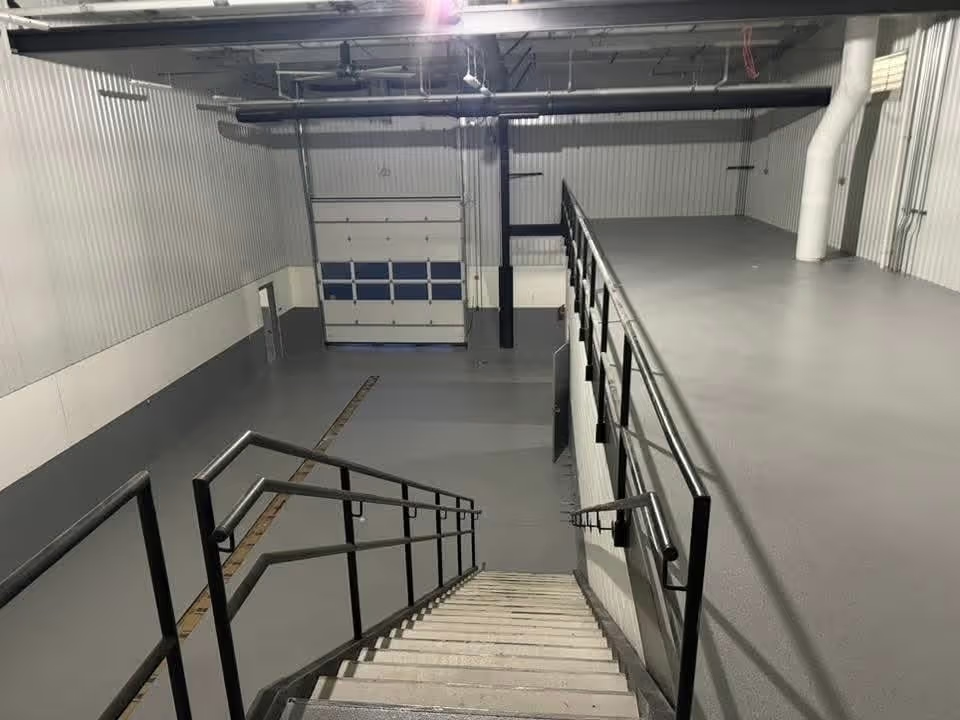
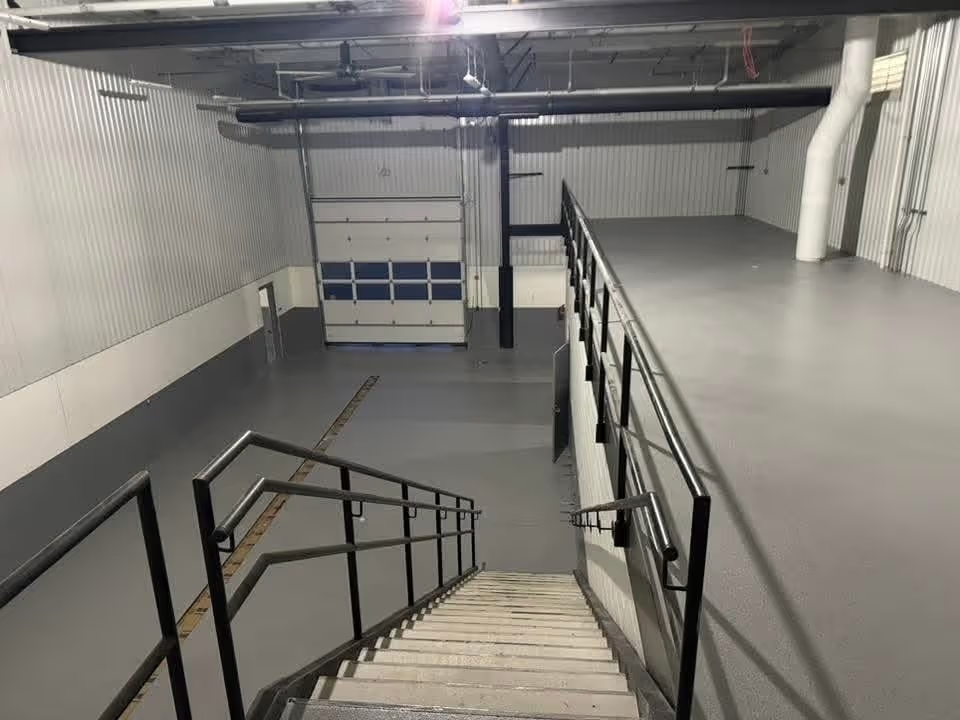
Urethane cement floor in a production area with steel stairs and a roll-up door
Most rooms do not need urethane cement.

Urethane Cement Flooring in San Jose, CA

RhynoPoxy Coatings installs urethane cement floors across San Jose and the South Bay. It is the heaviest system we lay and it is the right answer in a small number of rooms: the ones that get hot water, standing liquid and aggressive cleaning every single day. In most of a building, epoxy is the better and cheaper floor, and this page is about telling the two apart.

Food Grade Flooring
Specified by the cleaning regime · Heavy where it needs to be · Epoxy everywhere else

San Jose Urethane Cement Flooring Overview

San Jose production buildings tend to have one or two rooms doing something the rest of the building is not: a wash bay, a sanitation area, a process room that gets hosed at the end of every shift. Those rooms wear out floors that are perfectly adequate twenty feet away, and they are usually the reason somebody starts looking at urethane cement.

The useful question is not whether urethane cement is a good floor. It is which of your rooms actually need one. Specifying it across a whole building is an expensive way to solve a problem that lives in four hundred square feet, and specifying epoxy into a daily wash-down room is the cheaper mistake that gets made more often. What the systems are and how they are built up is on our urethane cement flooring page.

Commercial Kitchen Epoxy Flooring

Which Rooms Actually Need It

This is the short version of a conversation we have on most site visits. It is usually worth having before anybody prices a whole building.

Start by assuming epoxy

For the large majority of a production building, a resin floor specified to the traffic is the right answer and the cheaper one. Offices, storage, assembly, circulation and most process areas are all comfortably inside what epoxy does well. Reaching for the heaviest system everywhere is the most common way to spend money without buying anything.

Daily hot water changes the answer

The room that gets hosed down at the end of every shift is a different problem. It is not one event that matters but the fact that it happens every day for years, and that is the point at which the heavier system stops being over-specification and starts being the cheaper decision over the life of the floor.

What you clean with, not what you make

The deciding input is almost never the product. It is the cleaning regime: what goes on the floor, how hot, how often and how long it sits there. Bring us that list at the survey, including the sanitation chemicals, and the specification follows from it rather than from a guess about the industry you are in.

Two systems, one building

There is no reason a building has to be one floor throughout. The wash-down room gets the heavy system, the areas around it get a resin floor suited to their own use, and the two meet at a defined line rather than fading into each other. That is a normal specification and it is usually the one that costs least.

It does not have to look like a plant room

Urethane cement has a reputation for being purely functional, and it does not have to be. Color and finish are chosen for the room and named on the quote alongside everything else, so a sanitation area does not have to look like an afterthought just because it is built to be hosed.

What it will not fix

It is a floor, not a repair for a room. If the falls run the wrong way, if drainage is in the wrong place, or if the slab underneath has a real structural problem, a heavier system does not solve any of that and will fail in exactly the same places. Where that is what we find, we say so at the survey and price the thing that actually needs doing.

How a San Jose Wash-Down Floor Install Runs

  • Survey, and the cleaning regime. We look at the room and go through what actually happens in it: the wash-down routine, the chemicals, the temperature, the frequency and what stands on the floor. The specification comes out of that rather than out of the sector name.
  • The rooms sorted into systems. You get told which areas we think warrant the heavy system and which do not, with a system named against each and the reasoning written down, so the decision is yours to make rather than ours to assume.
  • One fixed price across both. The heavy areas and the resin areas are priced together as a single figure, with the boundary between them drawn, so choosing to extend one or shrink the other is a conversation rather than a re-quote.
  • Clearing and disconnection. Everything portable comes out of the room before we start, and the quote lists what that covers. Fixed plant and anything plumbed in stays, and the floor is finished cleanly against it. Where something has to be isolated or lifted, that is your contractor's work and it is agreed at the survey rather than on the morning.
  • Laying, and the room comes back. The system goes down to the stated build, the edges and boundaries are detailed, and you get the return-to-service times in writing. The room comes back as a room you can wash rather than one you have to be careful with.
Industrial Epoxy Floor With Coving
Background image
Commercial Kitchen Flooring

Why San Jose Production Sites Choose Us

  • We will talk you out of it where it is not needed. The heavy system is the largest number on our price list, which is exactly why we would rather scope it honestly. A building with one room done properly and the rest done sensibly is a better outcome than a building specified expensively throughout.
  • Specified from your routine, not your sector. Two buildings in the same industry can need completely different floors depending on how they are cleaned. We ask about the routine because that is the thing that actually decides it.
  • The South Bay is normal service area. San Jose work is surveyed, quoted and installed the way everything else is, by the same crew, with the same fixed price and the same written warranty at the end of it.

We also cover San Jose for industrial epoxy flooring and garage floor coatings. Our other urethane cement page covers Fairfield.

Frequently Asked Questions

  • How do we know whether we need urethane cement or epoxy?
    Describe the cleaning. If a room is swept, occasionally mopped and kept dry, epoxy specified to its traffic is almost certainly the right floor. If it is hosed with hot water and sanitation chemicals at the end of every shift, and there is standing liquid on it regularly, that is the case for the heavier system. Most buildings have a small number of rooms in the second category and a lot in the first.
  • Can we put it in one room and something else everywhere else?
    Yes, and that is usually what we recommend. The two systems meet at a defined boundary that is detailed properly rather than left as a joint between two finishes. It is a normal specification and it is almost always cheaper than taking the heavy system through the whole building.
  • Is it only for food production?
    No. Food and beverage is the best known use because wash-down is routine there, but the deciding factor is the regime rather than the product. Any room that is hosed hot and cleaned aggressively every day is the same problem to a floor, whatever is being made in it.
  • How long is the room out of use?
    It depends on the size of the room and the build being laid, and you get the actual figure in writing before anything starts rather than an estimate afterward. Rooms are done one at a time where the building needs to keep running, and the sequence is agreed at quote stage.
  • What does urethane cement cost compared with epoxy?
    More per square foot, which is exactly why the area it covers matters so much. The useful comparison is not the rate but the total: a small room in the heavy system plus a sensible resin floor everywhere else is normally well below one heavy specification across the whole building, and it performs better in both places.

Request a Free Quote

Interested in upgrading your concrete surfaces? Get in touch with our team today for a free, no-obligation estimate and expert advice tailored to your project.

Send us a message

Thank you! Your message has been received.

We'll get back to you as soon as possible.
Oops! Something went wrong while submitting the form.
Garage Floor Coating