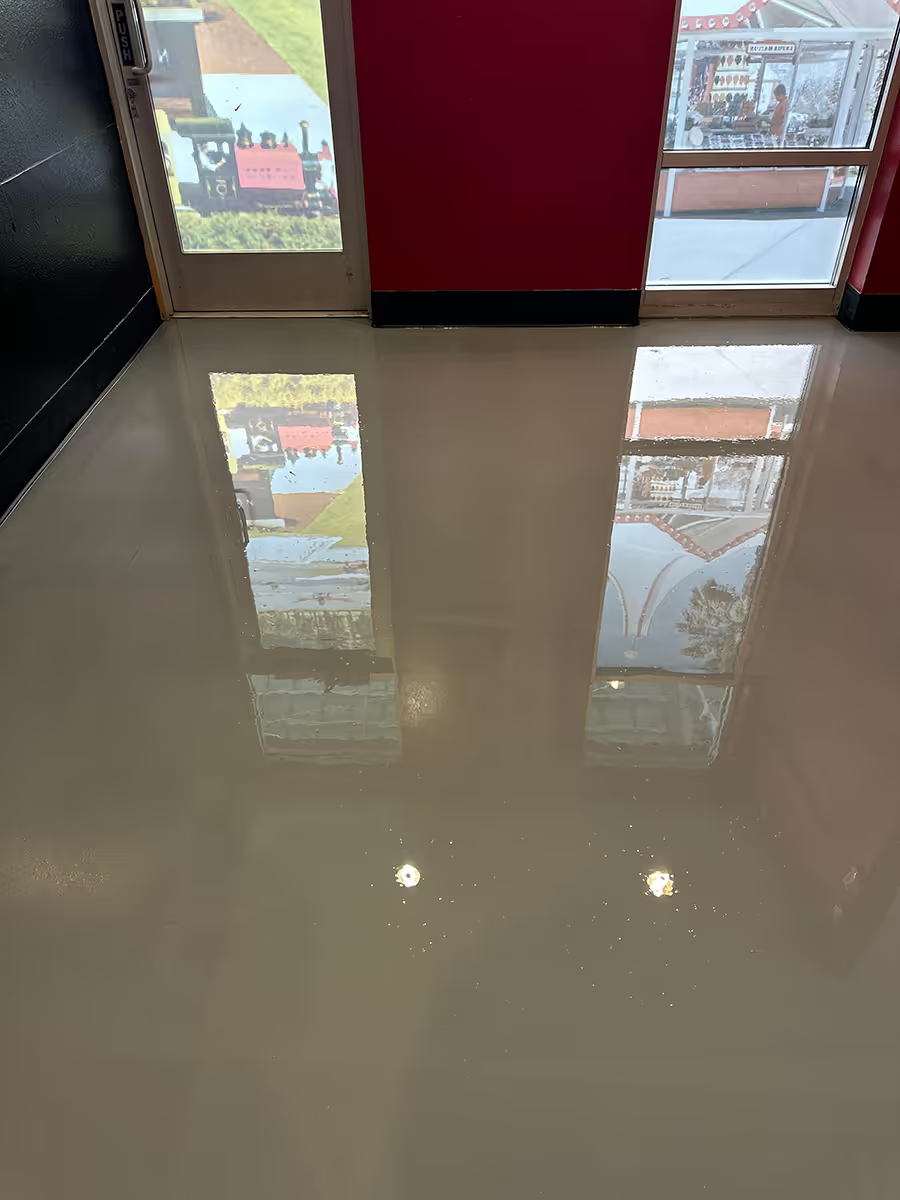

High gloss cream commercial floor reflecting the glass entrance doors and the street outside
Bought once, paid for every night.

Restaurant Flooring in Sonoma, CA

RhynoPoxy Coatings lays seamless kitchen, bar and back of house floors for restaurants around the Sonoma Plaza and out across the valley. A resin floor is bought once and then paid for nightly, in how long the close-down takes, in what the surface refuses to absorb, and in how many years go by before anyone has to lift it again.

One Day Flooring
Seamless · Non-porous · Nothing to re-seal

Sonoma Restaurant Flooring Overview

A restaurant floor is a small line on the fit-out budget and a large one everywhere else. It decides how long the close-down runs every night, whether the dish area ever really stops smelling, how often something has to be re-sealed or re-pointed, and how many years you get before the room comes out of service to have the whole thing done again.

A seamless resin floor moves those numbers without changing the look of the room. Nothing porous for grease and wine to sit in, nothing to re-seal, no grout to fail before anything else does, and no joints to mop around. What you are buying is a floor that costs less to run than it did to put in. The systems, thicknesses and finishes are covered on our restaurant flooring page.

Gray commercial floor with a coved base, a floor drain and a steel access hatch set into it

What the Floor Gives Back

Everything below is a cost you are already carrying on a tiled or sealed floor. This is what changes once the floor stops being made of separate pieces.

The close-down gets shorter

No grout lines to work along and no joints to go around, so the nightly clean is a pass with a scrubber or a mop instead of detail work in every corner. That time comes back at the end of every service, which is where most of what a floor really costs is hiding.

Nothing to re-seal or re-point

Sealed concrete and grout are consumables. They get stripped, re-sealed or re-pointed on a cycle, and every round is labor plus a room you cannot use. A resin floor has no annual maintenance line against it at all, only cleaning.

Wine, citrus and stock leave nothing behind

Red wine, vinegar, lemon, fryer oil and stock all stay on the surface rather than going into it. A floor that has taken up grease still smells of it after it has been mopped, and no cleaning product fixes a porous floor.

Grip where staff turn with both hands full

Aggregate is graded up in the dish area, along the cook line and at the walk-in approach, then eased back through the dry parts of the room so the rest of the floor still cleans quickly. One slip on a wet line costs more than the floor did.

One surface from the line to the bar

Kitchen, prep, cellar, bar back and the corridors between them can run as one continuous floor instead of four different surfaces meeting at four bad joints. Fewer edges is fewer places for it to start letting go.

It comes up once, not on a cycle

Tile drums and gets lifted, sealed concrete wears through at the doorways, vinyl opens at the seams. A properly prepared resin floor is a single bonded surface with a written warranty behind it, so the room is not booked out of service again to sort the floor out.

How a Sonoma Restaurant Floor Install Runs

  • Site visit, outside service. We walk the kitchen, the bar and the back of house while you are closed, and go through what the floor is doing now: where it stays wet, where it has already given up, and what your nightly clean actually involves.
  • Specification and one fixed price. The system, thickness, coving, falls, slip rating per area and finish all go in writing, priced as a single number that includes taking the old floor out. Not a range, and not a figure that moves once the tile is off.
  • You clear, we prepare. Anything that can be moved goes out before the first morning, which is quicker and cheaper for you than paying a crew to shuffle it around. Fixed equipment stays put and we run the new floor against it on a clean edge. Then the old floor and its bedding come out and the slab is ground back to sound concrete.
  • Laying, coving and drains. The floor is laid as one surface, the coving poured in with it rather than added afterwards, then the details are finished: drain surrounds, the walk-in threshold, and the line where the kitchen meets front of house.
  • Handover with the numbers. You are told when the room takes foot traffic and when equipment can come back in, and you keep the specification sheet, a cleaning regime written for the system you have, and the warranty document.
Polished Concrete Floor
Background image
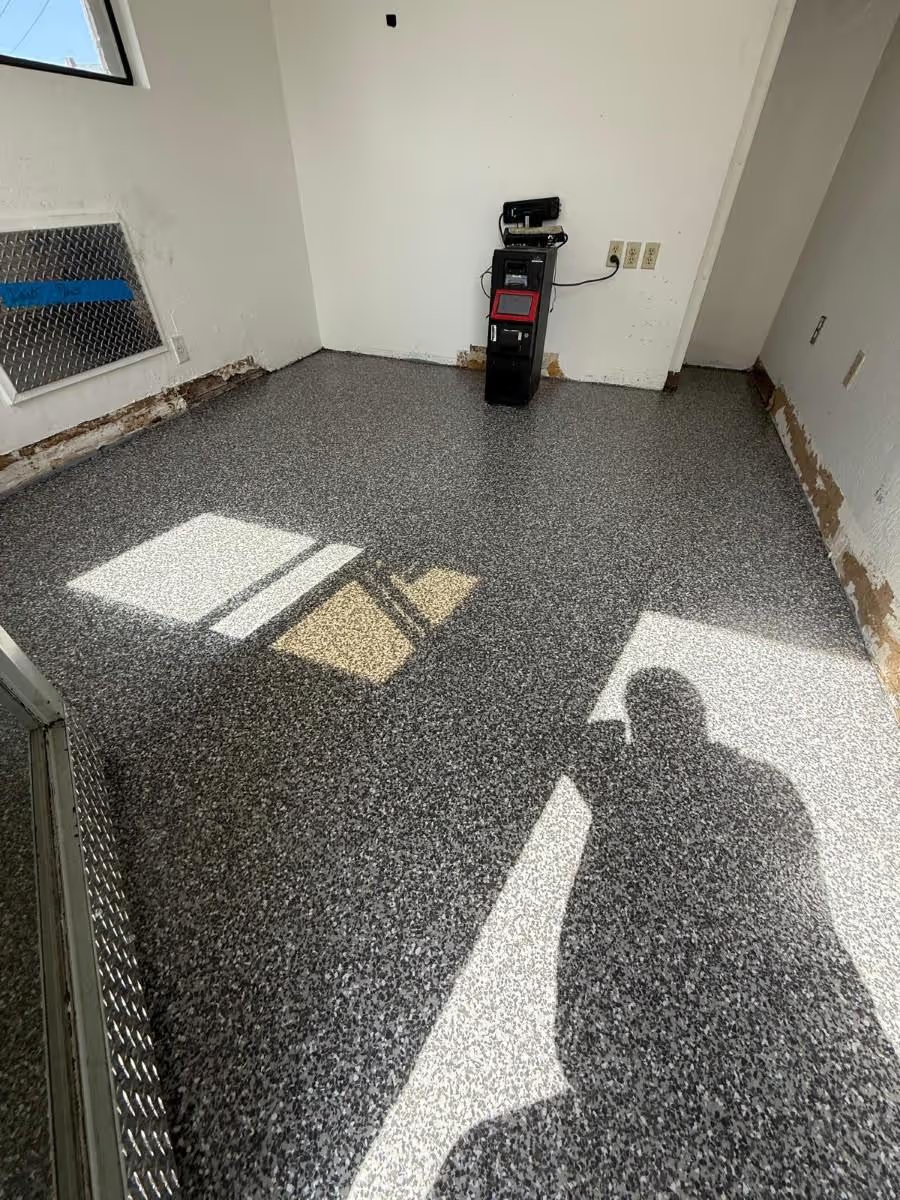
Gray flake floor in a small commercial room with a coved wall base and daylight across it

Why Sonoma Restaurants Choose Us

  • The price includes the part everyone forgets. Getting the old floor out is most of the labor and it is where surprise costs normally appear. It is in the quote from the beginning, along with preparation, drainage and coving, so the number you agree is the number you pay.
  • We fit around trading. Closed days, overnight work and splitting the room into passes are all ordinary here, and they are priced into the original quote rather than turning up as extras once the schedule tightens.
  • The warranty is a document. You get a written warranty covering the floor and its bond to the slab, together with the specification it was installed to, so anything ever argued about is settled on paper rather than from memory.

We also cover Sonoma for winery flooring. Nearby we do the same work on restaurant flooring in Napa, commercial kitchen flooring and brewery flooring in Santa Rosa.

Frequently Asked Questions

  • What does a restaurant floor cost?
    Area, the build the room needs, and how much old floor has to come out first. Lifting tile and its bedding is usually the biggest single piece of the job, so a room with a sound slab under it prices very differently from one carrying two layers. You get one fixed figure covering removal, preparation, drainage, coving, the system and the warranty.
  • How long does it last?
    Longer than what it replaces, in the way that matters: it is one bonded surface rather than an assembly of pieces that always fail at the joints first. These are the same systems specified for food production plants, and the finished floor is covered by a written warranty. What shortens any floor's life is preparation done badly, which is why most of the schedule is preparation.
  • Can we keep trading?
    In most cases yes. Closed days, overnight working and splitting the room into two passes are all normal for us. Where the room is small and everything runs off a single drain, a two or three day closure often costs you less than working around yourselves for a week, and we will say so at survey rather than afterwards.
  • Will red wine stain it?
    No. Nothing soaks in, so wine, beetroot, turmeric and the rest of a busy kitchen wipe off instead of settling into the floor. Color still matters for how the room reads between cleans, and it is named on the quote alongside the system so nothing about the finish is left open.
  • Can you do the bar and the dining room as well?
    Yes, and carrying the same floor through is usually better than stopping it at the kitchen door. Front of house takes a different finish, with the texture eased back and the color chosen for the room, laid continuous with the back so there is no threshold sitting in the middle of the doorway waiting to fail.

Request a Free Quote

Interested in upgrading your concrete surfaces? Get in touch with our team today for a free, no-obligation estimate and expert advice tailored to your project.

Send us a message

Thank you! Your message has been received.

We'll get back to you as soon as possible.
Oops! Something went wrong while submitting the form.
Garage Floor Coating