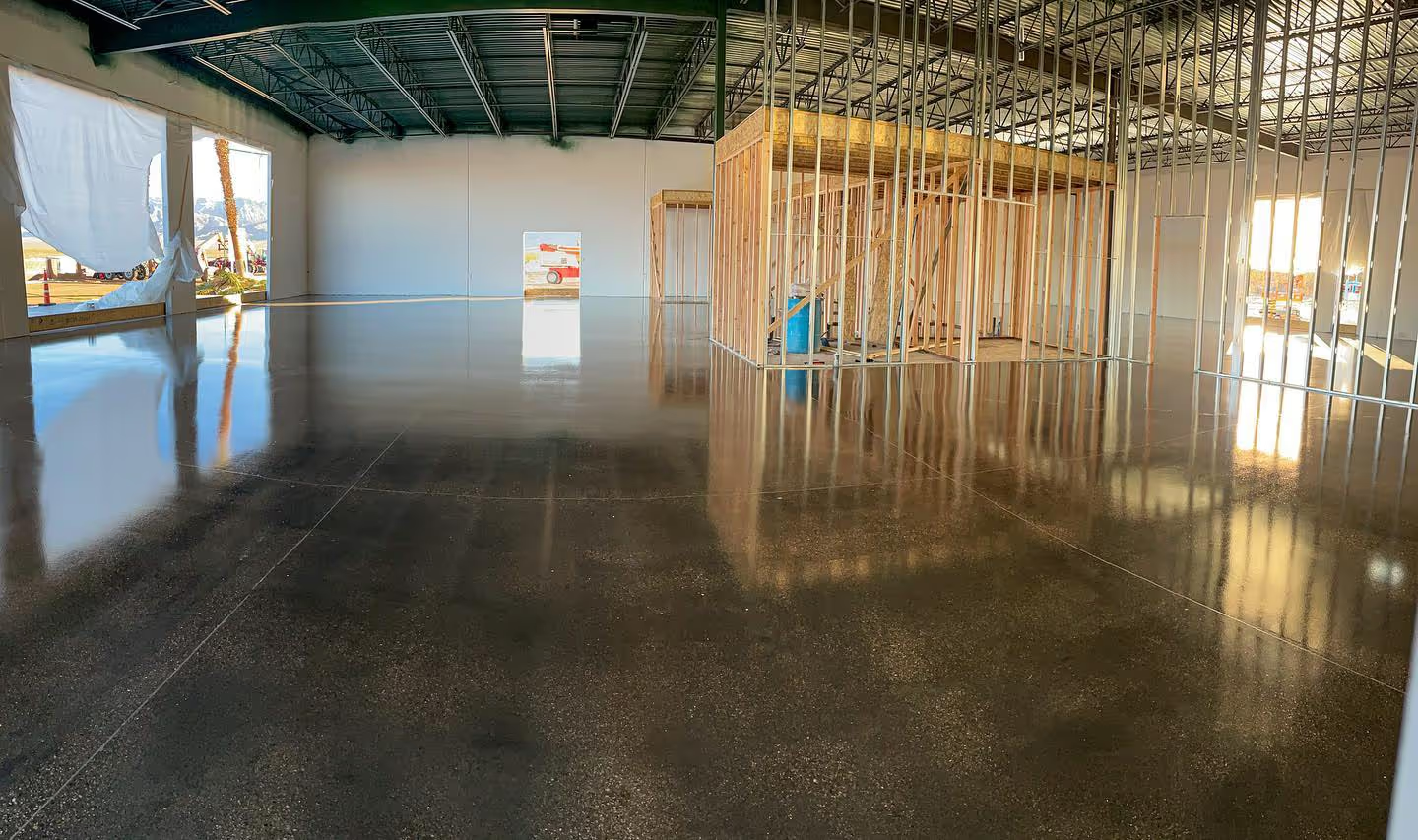

Polished concrete floor in a large open commercial space reflecting the ceiling structure
The floor is already there. This is what it can look like.

Polished Concrete in Concord, CA

RhynoPoxy Coatings polishes existing concrete floors across Concord for warehouses, showrooms, studios and homes. Nothing is added on top, so there is no coating to peel or delaminate later. What you end up with is the slab you already own, refined.

One Day Flooring
Nothing added on top · Choose the exposure · Choose the gloss

Concord Polished Concrete Overview

Polished concrete is not a coating and not a covering. The slab that is already in the building is refined mechanically and densified, and the finished floor is the concrete itself. That makes it a genuinely different proposition from epoxy: there is no film on top, so there is nothing that can lift, blister or peel away from the slab.

Two decisions define the result. How much aggregate is exposed sets whether you see a smooth cream finish, a salt-and-pepper speckle or the full stone in the mix, and the gloss level sets how much the floor reflects. Both are chosen by you and written on the quote. Our polished concrete page shows the finishes side by side.

Planetary grinder refining a concrete floor at a commercial entrance with the operator working behind it

What Your Concord Slab Will Give You

Polished concrete is the one floor where the honest answer starts with what you already have. Two slabs of the same age in the same building can finish differently, and knowing that before you commit is the difference between a floor you are pleased with and one that surprised you.

The slab decides the character

If the aggregate sits close to the surface you can open the floor up to full stone. If it sits deep, or the surface is a soft topping, a cream or light salt-and-pepper finish is the sensible result. We look at the slab on site and tell you which one you are working with before you commit to a look.

Exposure is your choice

Cream keeps the surface as poured, salt-and-pepper shows the sand and fine stone, and full exposure brings out the large aggregate. They read completely differently in the same room, and the decision goes on the quote rather than being left to the day.

Gloss is a separate decision

Matte, satin and high gloss are all available and none of them is the default. A high gloss floor is striking in a showroom and shows every footprint in a warehouse, so the right answer depends on the room rather than the photograph.

Nothing on top to fail

There is no film, no membrane and no adhesive. The wear surface is the concrete, densified through its own top layer, so the failure mode that worries people about coated floors, lifting away from the slab, does not apply here.

Joints, patches and old fixings

Saw cuts, previous repairs and holes left by racking are part of the floor's history and will still be there afterward, filled and level but not invisible. On an older slab that character is usually the point. Where it is not, we will say so at the site visit rather than after.

It stops the slab dusting

A bare warehouse slab sheds fine powder onto stock, racking and vehicles continuously. A densified, polished surface stops that, which for a lot of Concord distribution and storage space is the whole reason for doing it.

How a Concord Polishing Job Runs

  • Site visit and finish selection. We look over the slab, measure the area, and go through what exposure and gloss level it will realistically give you. Coatings, adhesive residue and covered areas are identified now, because they change the price. You get the finish written on the quote.
  • Clearing and repair. Old coverings, adhesive and coatings are removed, and cracks, spalls and redundant fixing holes are filled so the surface runs true before refining starts.
  • Refining and densifying. The floor is refined in stages with dust extraction running throughout, and a densifier is applied so the top layer of the slab hardens rather than sitting soft under the polish.
  • Polishing to the chosen gloss. Refining continues to the gloss level you selected, so the finished sheen is the one you asked for rather than whatever the slab happened to reach.
  • Handover. You get return-to-service times in writing, a maintenance routine that needs a dust mop and a neutral cleaner, and a written record of the finish that was installed.
Concrete floor being refined by a planetary grinder inside a commercial service bay
Background image
Concrete slab being prepared with a grinder and vacuum extractor beside a trench drain

Why Concord Sites Choose Polished Concrete

  • You are told what the slab will give. The finish that is achievable on your floor is discussed at the site visit and written down, so nobody is selling you a photograph of somebody else's aggregate.
  • Fairfield based, in Concord regularly. I-680 puts Concord about thirty minutes from us, so a site visit is quick to arrange and there is no travel premium built into the number you are quoted.
  • Lowest ongoing cost of any floor we install. No waxing, no stripping, no recoating cycle. A dust mop, a neutral cleaner and occasional burnishing keep a polished floor going for years.

We also install commercial epoxy flooring in Concord and garage floor coatings in Concord. If you are outside Concord, our areas served page lists every city we cover.

Frequently Asked Questions

  • Will my slab actually polish?
    Most sound concrete floors will, but what they will polish to varies a great deal. A hard, well finished slab can be opened up to full aggregate, while a softer or heavily patched one gives its best result at a cream or light salt-and-pepper finish. We look at the floor on site and tell you what is realistic for yours before you commit, rather than promising a look and discovering the answer with the machine already in the building.
  • How is this different from an epoxy floor?
    Epoxy adds a new surface on top of your slab. Polishing refines the slab itself. That means no film to peel or delaminate, and a floor that cannot be a different color from the concrete underneath it. Epoxy wins where you need a specific color, a chemical-resistant surface or coving into the wall. Polishing wins where you want the lowest ongoing cost and you like what the concrete looks like.
  • Our floor has adhesive and old tile on it. Is it still worth doing?
    Often yes, but the removal is real work and it belongs on the quote as its own item rather than being buried in a square foot rate. What matters is what is under it: the slab may be in good shape, or the covering may have been hiding a poor surface. That is exactly the sort of thing worth establishing at the site visit before you plan around a date.
  • How much maintenance does it need?
    A dust mop and a neutral cleaner. No waxing, no stripping and no recoating cycle, which is the main reason warehouses and showrooms choose it over a coated or tiled floor. High traffic lanes will dull before the rest of the floor does, and burnishing brings them back rather than requiring the floor to be redone.
  • What moves the price?
    Area sets the baseline, and after that it is mostly about what the slab needs before it can be refined. Taking off an old covering, adhesive or a failed coating is the single biggest variable. Repairs come next, and then the finish itself, because a deeper exposure and a higher sheen are more work than a cream finish left matte. You get one fixed figure once we have walked the floor.

Request a Free Quote

Interested in upgrading your concrete surfaces? Get in touch with our team today for a free, no-obligation estimate and expert advice tailored to your project.

Send us a message

Thank you! Your message has been received.

We'll get back to you as soon as possible.
Oops! Something went wrong while submitting the form.
Garage Floor Coating