Dark flake floor laid across a shop floor with a service counter and wall displays behind it
The floor your guests stand on is still a working floor.

Winery Flooring in Sonoma, CA

RhynoPoxy Coatings floors Sonoma Valley wineries where production and hospitality share one building: crush and cellar behind the door, tasting room, barrel room and event space in front of it. One specification runs through both, with the finish chosen so the working end holds up and the visitor end looks like it was always meant to be there.

One Day Flooring
Coved and drained · Slip graded by area · Rated for crush

Sonoma Winery Flooring Overview

In Sonoma the winery is the destination. People walk past the press, stand in the barrel room with a glass in hand and sit down to dinner between the racks. That asks something of the floor a closed production plant never has to answer: it has to get through harvest and still belong in a room somebody paid to be in.

Getting both means treating the finish as part of the specification rather than a decision left to the end. Color, gloss and texture are settled against what each area does and who is standing on it, then laid as one continuous, coved surface so the visitor side is never something added over the top. What the systems are and what each one takes is set out on our winery flooring page.
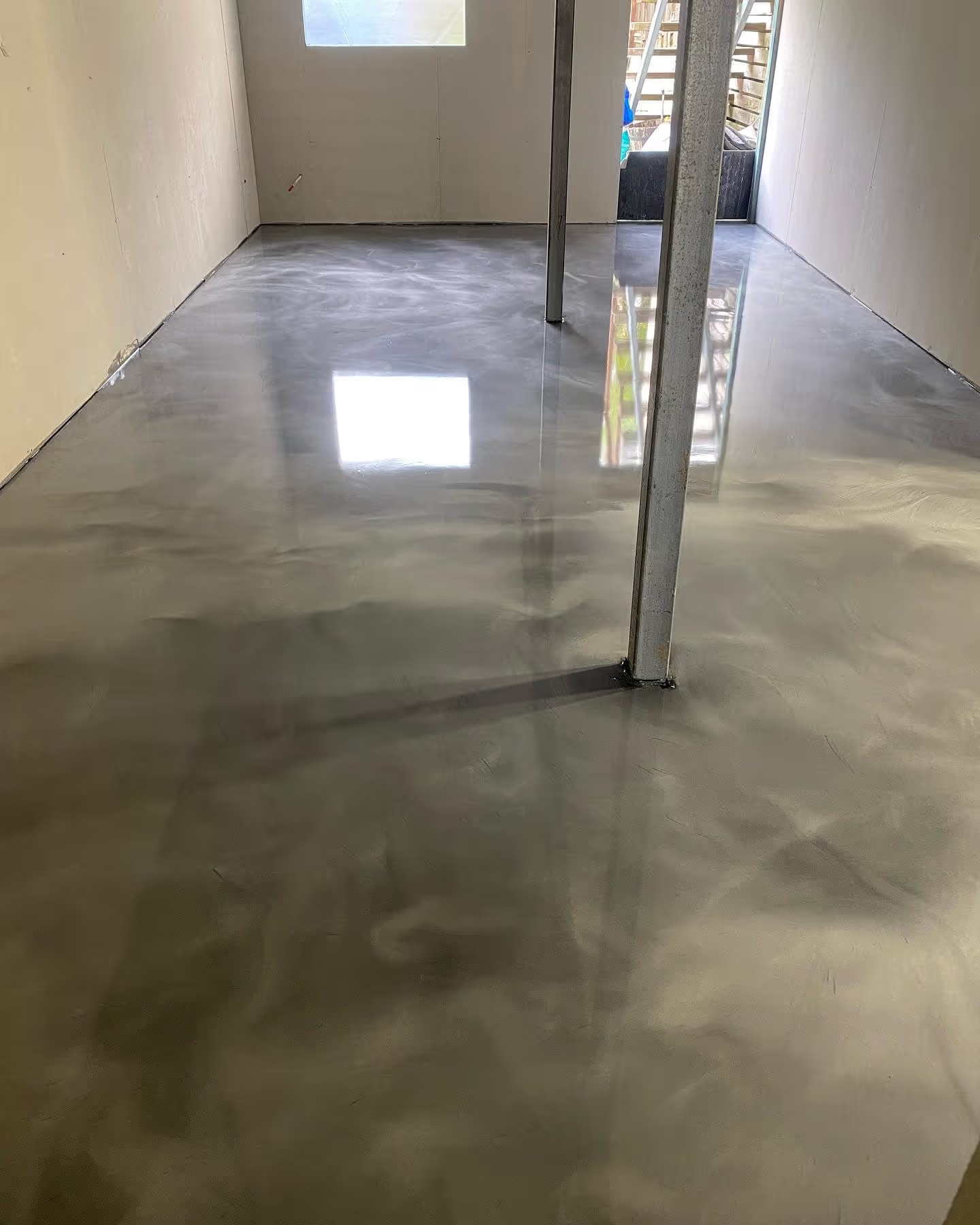
Metallic Epoxy Floor

A Floor That Works at Both Ends

Very few wineries in the valley have a production block nobody sees. The same floor runs from a wet crush area into a room with chairs in it, so it gets specified for both of those at once instead of one after the other.

Built for crush, finished for guests

The working end gets the full production build: heavy, coved at the wall, laid to fall so juice and wash water reach a drain. The visitor end carries the same system with the finish taken up a level. Nothing is thinned down to make it look better.

Color chosen against red wine

Red wine on a pale floor is the complaint we hear most. Mid-tone and blended finishes hide a spill between cleans without going so dark that every scuff shows. The color and the gloss level go on the quote with the system, so the floor you agreed to is the floor that gets laid.

Texture that changes at the door

A crush area needs aggregate underfoot that would be wrong in a tasting room, where the floor is dry and half your visitors arrive in smooth soles. Slip resistance is graded by area, heavy where it runs wet and eased back where it does not.

Barrel rooms that hold dinners

A barrel room floor carries racking loads and a pallet jack all week, then a hundred chairs on Saturday. It gets a surface hard enough for the first and flat enough for the second, so tables sit level and chairs do not catch on the way in.

Thresholds detailed, not butted

Where the production floor meets the visitor floor there is a joint, and it either looks deliberate or it looks like a repair. Transitions are set out at survey and laid as a clean line, ramped rather than stepped where the levels differ.

One cleaning routine, not two

The surface is non-porous from end to end, so the cellar can be hosed and the tasting room can be mopped without a separate maintenance regime for the front, and without an annual re-seal to keep it presentable.

How a Sonoma Winery Floor Install Runs

  • Walk the building, front and back. We go through the production side and the visitor side in one visit: what runs wet, where guests actually go, where the levels change, what sits on the floor permanently, and what the finished floor has to look like.
  • Color and finish agreed per area. Color, gloss and texture are settled area by area before anything is ordered, because a finish that reads well in a bright room can be wrong in a barrel room, and the texture that belongs on a crush floor does not belong under a tasting bar.
  • Specification and fixed quote. You get the system, thickness, slip rating per area, coving and drainage detail, the threshold treatment and the finish agreed for each area, priced as one number with the working dates written into it.
  • Clearing and preparation. Anything that can be moved out is cleared by you before the first morning. Tanks, racking and anything genuinely fixed stay where they are and the floor is finished up to them on a clean edge. The slab is then ground back to sound concrete and the falls are marked out before laying starts.
  • Laying and handover. The floor goes down continuous with the coving formed into the same pour, then we confirm when it takes foot traffic, a pallet jack and full load, and hand over the finish specification, a cleaning routine matched to the system and the warranty.
Coated industrial floor with a checker plate access hatch, floor drains and a coved wall base
Background image
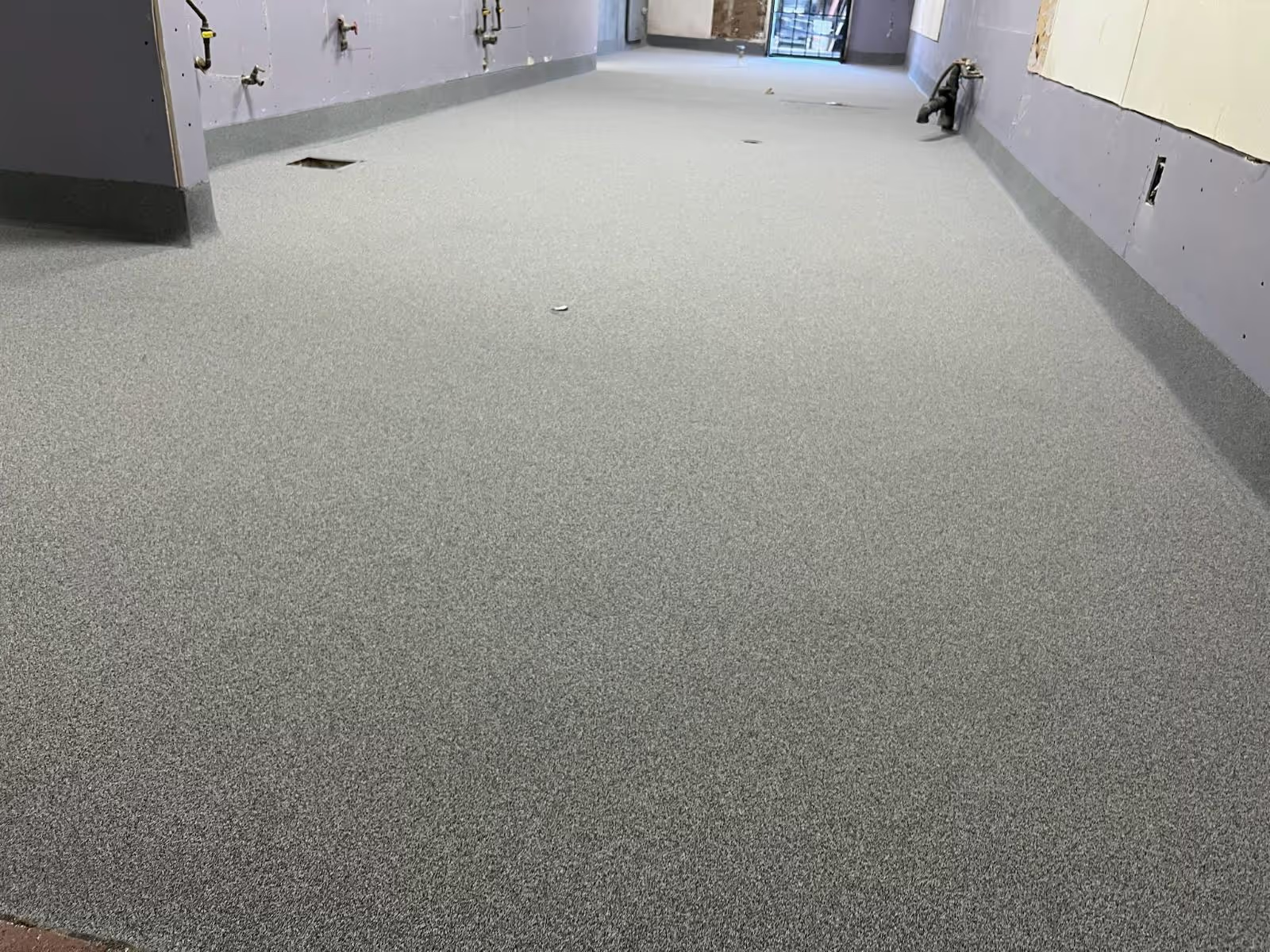
Light gray flake floor in a commercial back room with a coved wall base under fitted units

Why Sonoma Wineries Choose Us

  • The finish is agreed, not assumed. Color, gloss and slip rating are named per area on the quote. That means the finish is written down and agreed at the point you accept the price, rather than something you find out about once the floor is down.
  • One standard, both sides of the door. The tasting room is not treated as decoration and the cellar is not treated as the part that does not matter. Same crew, same preparation, same written warranty across the whole building.
  • We work to the calendar you already have. Harvest is fixed and the event diary is booked months ahead. Give us both at survey and the dates go into the quote, so the work lands in the window you can actually give us.

We also cover Sonoma for restaurant flooring. Our other wine country pages are winery flooring in Napa, Santa Rosa and brewery flooring in Santa Rosa. We also cover winery flooring in Livermore.

Frequently Asked Questions

  • Will red wine stain the floor?
    No. The surface is non-porous, so wine sits on top of it and lifts with a normal clean instead of soaking in the way it does through sealed concrete or grout. Color is still worth taking seriously, because a very pale floor shows a spill between cleans even when nothing has actually stained.
  • Can the tasting room stay open while you work?
    Usually. Production and hospitality are separate rooms with a door between them, which makes them straightforward to take in separate passes. Where the tasting room itself is being floored, that one room comes down for a few days and the rest of the building keeps trading.
  • Our cellar is an old stone building. Can you floor it?
    In most cases yes. An old building usually means an uneven slab, more than one pour, and a level that changes at every doorway. That is a preparation question rather than a reason to say no: the slab is ground back, low spots are brought up and the finished surface is laid continuous over all of it.
  • How soon can guests be back on it?
    Foot traffic is normally fine 24 hours after the last coat, with tables and chairs back in the day after that. If you have an event booked, give us the date at survey and we will either commit to it or tell you straight away that it is too tight.
  • What does a winery floor cost?
    It comes down to area, the build each part of the building needs, and how much detail there is in it: coving, drains, thresholds and the geometry around tank pads all take time. A tasting room sits at the lower end and a crush area at the top. You get one fixed number covering preparation, the system, the finish you chose and the warranty.

Request a Free Quote

Interested in upgrading your concrete surfaces? Get in touch with our team today for a free, no-obligation estimate and expert advice tailored to your project.

Send us a message

Thank you! Your message has been received.

We'll get back to you as soon as possible.
Oops! Something went wrong while submitting the form.
Garage Floor Coating