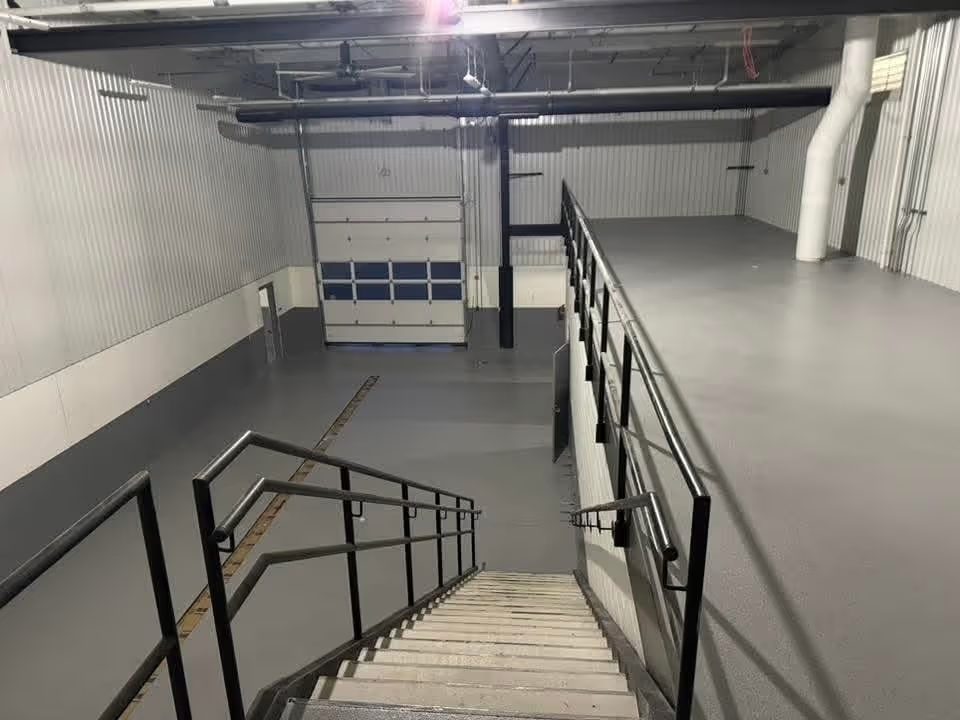

Urethane cement floor in a production area with steel stairs and a roll-up door
One plant, several floors, specified separately.

Winery Flooring in Santa Rosa, CA

RhynoPoxy Coatings installs seamless, chemical-resistant flooring for Santa Rosa and Russian River Valley wine production: crush and press areas, cellars, cold stabilization rooms, bottling halls and case goods warehousing, each specified for what that room actually does.

One Day Flooring
Forklift rated · Chemically specified · Zoned by area

Santa Rosa Winery Flooring Overview

A production winery is not one floor, it is five or six. Crush and press runs wet and acidic, the cellar takes hot wash-down, cold stabilization sits near freezing, bottling deals with glass, sugar and constant spillage, and case goods is a warehouse floor carrying loaded pallets. Specifying a single system across all of that guarantees some of it is wrong.

We survey the plant as a set of zones and specify each one against its own traffic, chemistry and temperature, then install them as one continuous, coved and drained surface where the rooms connect. The result costs less than over-specifying everywhere and lasts longer than under-specifying anywhere. Each of those zones is taken in turn on our winery flooring page.

Seamless gray resin floor with a coved base running past stainless steel shelving

Specified Room by Room

The floors we get called back to look at in Sonoma County production sites almost always failed in one particular room while the rest held up fine. That is a specification problem, not a product problem, and it is avoidable at survey.

Crush and press: acid and wet traffic

Tartaric acid, must and juice sit on this floor for weeks while loaded bins and forklifts run over it. It gets the heaviest build and the highest slip rating in the plant.

Cellar: hot wash-down and thermal cycling

Repeated hot water, steam and caustic cleaning cycle the surface between temperature extremes. Urethane cement moves with the slab instead of debonding from it, which is what ends epoxy in a working cellar.

Cold stabilization and chilled rooms

These systems cure and perform at low temperature, so a stabilization room or chiller does not have to be warmed up to be floored, and the finished surface does not fail at the first big temperature swing.

Bottling: glass, sugar and constant spill

A bottling hall floor is wet, sticky and full of glass fines, and it has to be scrubbed clean daily. It gets a non-porous surface with cleanability weighted over aggressive texture, and falls that actually clear it.

Case goods: point loads and pallet traffic

Warehousing is specified against racking leg loads, pallet jack and forklift wheel loads and drop damage, with line marking laid into the system so it wears at the same rate as the floor.

Tank pads, plinths and drains detailed in

Coving is carried up walls, around tank pads and equipment plinths and into drain terminations in the same pour, which is where a floor gets undermined if it is treated as an afterthought.

How a Production Winery Install Runs

  • Plant walk and zoning. We walk every room, record traffic weights, chemistry, temperatures and wash-down regime, and mark up the plant as zones with a proposed system against each.
  • Specification, phasing and fixed quote. You get system, thickness, slip rating and chemical tolerance per zone in writing, with a phasing plan that says which rooms are down when and for how long.
  • Preparation and drainage. Slabs are shot blasted zone by zone, drainage is opened up and re-cut where it sits in the wrong place, joints are treated, and the fall design is marked on the floor before the first material arrives.
  • Zone-by-zone installation. Each zone is laid, coved and detailed inside its own window while the rest of the plant carries on, with transitions between zones detailed rather than butted together.
  • Handover by traffic type. We confirm return to service separately for foot, pallet and loaded forklift traffic, then hand over the per-zone specification and cleaning regime.
Installers working a freshly applied resin floor coating
Background image
Industrial Epoxy Floor With Coving

Why Sonoma County Producers Choose Us

  • We phase by room, not by building. Bottling can keep running while the cellar is down, and vice versa. The phasing plan goes into the quote at the start, so downtime is a number you agreed rather than something that emerges halfway through.
  • A specification you can audit. Systems, thicknesses, preparation standards, slip ratings and chemical limits are set out per zone on paper. If you want to hold the finished job up against the specification room by room, you can.
  • Wine country work is what we do. With Sonoma County and Napa County either side of us, production wine floors are something we install regularly rather than occasionally. Santa Rosa is standard service for us and gets the same crew and the same specification process as a site ten minutes from the yard.

For brewhouse and cellar work in Santa Rosa, see brewery flooring in Santa Rosa. For residential work, see garage floor coatings in Santa Rosa. Across the county line, we do the same work on winery flooring in Napa. In the south of the county we also cover winery flooring in Sonoma. East of the bay, we cover winery flooring in Livermore.

Frequently Asked Questions

  • Can you work without stopping the bottling line?
    In most plants, yes. We phase room by room so bottling, cellar and warehousing come down in sequence rather than together, and we can work nights and weekends where a room cannot be released in the working week. The phasing plan is agreed and priced before we start, not negotiated once the shot blaster is running.
  • How do you decide which system goes in which room?
    Four things: what runs over the floor and how heavy it is, what gets spilled and cleaned with, the temperature range, and how wet the room stays. Those give a thickness, a chemical tolerance and a slip rating per zone. It is why a crush pad and a case goods aisle end up with genuinely different floors.
  • Will it cure in our cold stabilization room?
    Yes. Urethane cement cures and performs at low temperatures, so a stabilization room, chiller or cold store can be floored without bringing it up to ambient, and it will not fail on the first hard temperature swing the way a standard epoxy will.
  • Our case goods warehouse floor is dusting badly. Is that the same job?
    Same crew, different specification. A dusting warehouse slab is usually a surface strength problem rather than a chemical one, so the answer is often a densifier and a hard-wearing resin build with line marking laid in, not a food-grade screed. We would price it as its own zone.
  • How soon can forklifts run on the new floor?
    Foot traffic is normally fine at 24 hours, pallet jacks around 48, and loaded forklifts between 48 and 72 depending on the system and the temperature during cure. Those figures are confirmed per zone in writing at handover so nobody guesses.

Request a Free Quote

Interested in upgrading your concrete surfaces? Get in touch with our team today for a free, no-obligation estimate and expert advice tailored to your project.

Send us a message

Thank you! Your message has been received.

We'll get back to you as soon as possible.
Oops! Something went wrong while submitting the form.
Garage Floor Coating