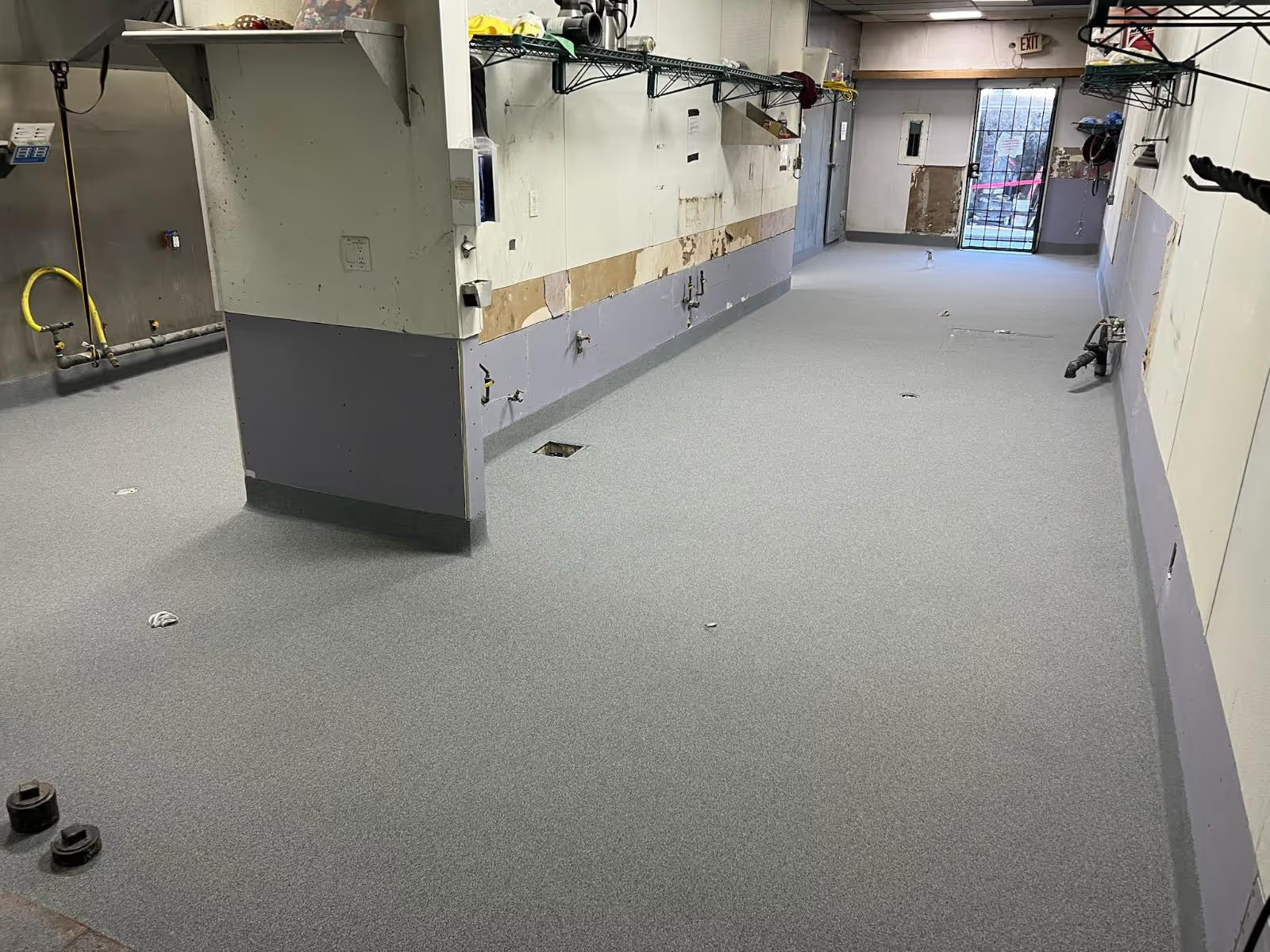

Commercial Kitchen Anti Slip Floor
Floors built for daily hot wash-down.

Urethane Cement Flooring in Fairfield, CA

RhynoPoxy Coatings installs urethane cement floors for Fairfield food and beverage production areas, breweries, cold stores and commercial kitchens, with surfaces that take boiling water, steam cleaning and caustic wash-down every day without breaking down.

One Day Flooring
Thermal shock resistant · Seamless coving · Wash-down ready

Urethane Cement Flooring Overview

Urethane cement is what goes down where epoxy will not survive. It handles thermal shock from hot wash-down and steam cleaning, resists the organic acids, sugars and caustics found in food and beverage production, and can be laid thick enough to take heavy plant and pallet traffic.

It is installed as a seamless surface with integral coving up the walls and falls laid to the drains, so there are no joints or floor-to-wall junctions for product and bacteria to sit in. The material, and the temperature range it holds up to, are covered on our urethane cement flooring page.

Commercial Kitchen After Epoxy Floor

Why Urethane Cement for Food and Beverage

Production floors fail for reasons that do not affect an ordinary commercial slab: repeated hot and cold cycling, aggressive clean-down chemistry, and standing water that finds every joint. Urethane cement is formulated specifically for those conditions.

Thermal shock resistant

The floor tolerates boiling water, steam cleaning and rapid temperature swings without cracking or debonding, the failure mode that ends most epoxy floors in a wash-down area.

Seamless with integral coving

Coving is formed as part of the floor and taken up the wall, removing the floor-to-wall joint entirely so there is nowhere for product residue or bacteria to collect.

Falls laid to drain

Falls are formed so wash-down water runs to the drains instead of pooling, which matters for both hygiene and slip safety.

Resists production chemistry

Lactic and other organic acids, sugars, fats, brine and caustic cleaning agents are all within the system's tolerance rather than gradually degrading it.

Slip resistance you can specify

Aggregate is graded into the surface to hit the slip resistance a wet production area needs while still being cleanable with a scrubber-drier.

Inspection-ready surface

Non-porous, seamless and cleanable, which is what an environmental health inspector is looking for in a food production or preparation area.

How a Wash-Down Floor Install Runs

  • Survey and specification. We assess the slab, drainage layout, wash-down regime and temperatures involved, then specify thickness, typically 6 to 9mm where plant traffic and thermal cycling are heavy.
  • Preparation and drainage. The slab is shot blasted, drains and gullies are cut in or reformed, and falls are set out before any material is laid.
  • Laying and coving. The floor is laid seamlessly and integral coving is formed to the walls and around plinths and equipment bases in the same pour.
  • Detailing and finish. Drain terminations, expansion joints and thresholds are detailed, and the surface texture is finished to the agreed slip rating.
  • Handover. We confirm return-to-service times, provide a cleaning regime compatible with the system and issue the written warranty.
Epoxy Coving
Background image
Commercial Kitchen Food Grade Floor

Why Fairfield Production Sites Choose Us

  • Wash-down floors are routine work. Fairfield has a real concentration of food and beverage manufacturing, and these floors are something we install regularly rather than occasionally.
  • Scheduled around production. Installations are planned into shutdowns, weekends and line changeovers so production loss is kept to the minimum the material allows.
  • Documented for inspection. You receive the system specification and cleaning regime in writing, which is what you need on hand when environmental health visits.

For general commercial slabs in Fairfield, see commercial epoxy flooring in Fairfield. For residential work, see garage floor coatings in Fairfield. Our other urethane cement page covers San Jose.

Frequently Asked Questions

  • How is urethane cement different from epoxy?
    Epoxy is a resin coating, usually under 1mm thick, and it debonds under repeated hot wash-down. Urethane cement is a trowel-applied screed, typically 6 to 9mm, formulated to take thermal shock and aggressive cleaning chemistry. In a wet production area it is the correct choice.
  • How long does the floor take to install?
    Preparation, drainage and laying typically run three to five days for a production area, depending on size and how much drainage work is needed. It can usually be phased across a shutdown.
  • Can it be laid in a cold store or freezer?
    Yes. Urethane cement systems can be installed at low temperatures and are commonly used in chillers and freezers where other systems will not cure or will fail under thermal cycling.
  • Will it pass a health department inspection?
    The finished surface is seamless, non-porous, coved to the walls and drainable, which is what inspectors assess. We provide the specification and cleaning regime documentation to support it.
  • What cleaning chemicals can we use on it?
    The system tolerates the standard caustic and acidic clean-down chemistry used in food and beverage production. We confirm the specific compatibility list for your installed system at handover.

Request a Free Quote

Interested in upgrading your concrete surfaces? Get in touch with our team today for a free, no-obligation estimate and expert advice tailored to your project.

Send us a message

Thank you! Your message has been received.

We'll get back to you as soon as possible.
Oops! Something went wrong while submitting the form.
Garage Floor Coating